
Routledge Handbook of Eco-Phenomenology
Vše od
Taylor & Francis
ISBN: 9781032881805
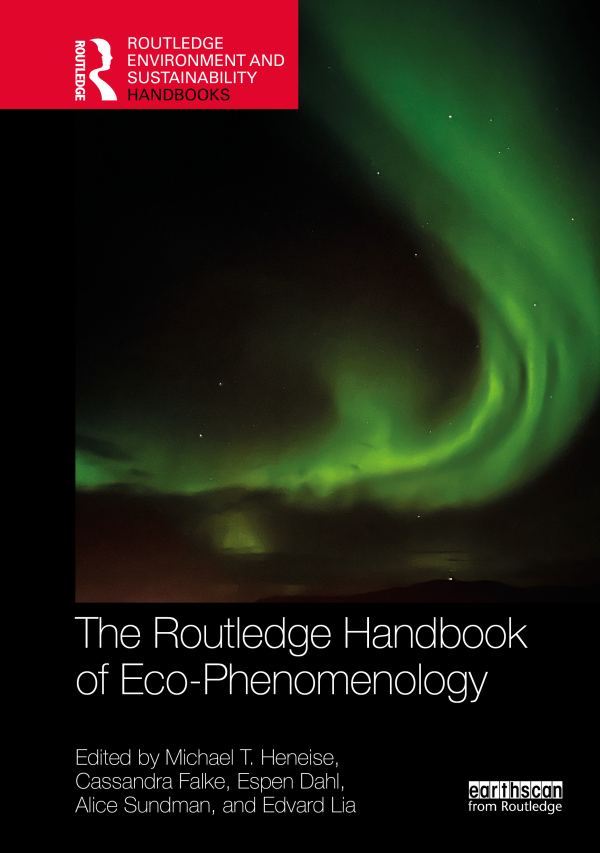
The Routledge Handbook of Eco-Phenomenology is a comprehensive explorative volume into how we, as humans, interact with and perceive our natural world. Spanning seven thematic parts, over thirty chapters offer fresh perspectives on our relationship with the Earth and its inhabitants.
Chcete ušetřit? Najdete u nás i výhodné sady produktů.
Množstevní slevy pro školy i jednotlivce.
7 163 Kč
- 1 - 3 ks
- 7 163 Kč
- 4 - 20 ks
- 7 092 Kč
- 21 a více ks
- 7 023 Kč
Naše cena 7 163 Kč je o 5 % nižší než
doporučená cena výrobce 7 540 Kč.
Předpoklad doručení do 18. listopadu *
* Termín expedice je odhadovaný a může se mírně upravit podle termínu dodání od našeho dodavatele. Pokud by došlo ke změně, vždy vás budeme včas informovat.
Nepřehlédněte od Taylor & Francis ↓

7 163 Kč
Více o produktu ↓
The Routledge Handbook of Eco-Phenomenology is a comprehensive explorative volume into how we, as humans, interact with and perceive our natural world. Spanning seven thematic parts, over thirty chapters offer fresh perspectives on our relationship with the Earth and its inhabitants.
The Routledge Handbook of Eco-Phenomenology is a comprehensive exploration of how we, as humans, interact with and perceive the natural world. Spanning seven thematic sections, this wide-ranging collection gathers contributions from leading scholars in philosophy, theology, anthropology, literature, music studies, and environmental thought. Together, over 30 chapters offer fresh perspectives on how we inhabit a more-than-human world.
At the heart of this volume is the dynamic intersection of phenomenology – a philosophical tradition attentive to embodied experience – and environmental ethics, inviting readers to rethink assumptions about activism, passivity, and ecological responsibility. Rather than advancing a unified doctrine, the chapters explore eco-phenomenology as a field of ongoing tension and dialogue, attentive to receptivity, perception, and the ethical demands of a world that exceeds us.
Key themes include re-evaluations of human embodiment in relation to nature, the role of perception in understanding our ecological entanglements, and cultural attitudes that challenge human exceptionalism. Literary explorations and reflections on music deepen the inquiry, showing how the arts open distinct pathways of attunement to the environment. The volume culminates in critical dialogues between eco-phenomenology and other intellectual traditions, including posthumanism, Indigenous cosmologies, and enactivism.
More than an academic survey, this handbook is an invitation to rethink environmental engagement as a mode of being rooted in care, vulnerability, and attentiveness to the Earth as our shared home. It is essential reading for scholars, researchers, and students in philosophy, environmental studies, anthropology, literature, and the arts.
The open access publication of this volume was funded by contributions from several institutions. The largest single contribution was made by the Publication Fund of UiT The Arctic University of Norway. Further contributions were made by Aalborg University; the Universitat Oberta de Catalunya; the Norwegian University of Science and Technology (NTNU); the University of the Free State; Ohio Northern University; the University of Saskatchewan; the Institute of Philosophy of the Czech Academy of Sciences (CoRe project); the Sven and Dagmar Salen Foundation; and the Chinese University of Hong Kong, together with individual contributors' own research funds.
Obsah
1. Introduction to The Routledge Handbook of Eco-Phenomenology, Section 1. Given Nature, 2. Transcending the Object Horizon: Nature as Given and Saturated Phenomenon,
3. Eco-Phenomenology and the Theological Turn? Passivity, Activity, and Traumatic Being, 4. Birth, Nature, and Repetition: Arendt and Beyond, 5. The Mirror-Play of Being Used and Needed: Rereading (Ge-)brauchen in Heidegger for Eco-Phenomenology, Section 2. Passivity and Perception, 6. Earth Un-Earthed: Total Solar Eclipses as Sur-Réflexion on the Earthborne Topology of Flesh, with Remarks on Transcendental Geology, 7. Aesthetic Practices and Cultural Change: Challenging Environmental Neuroticism, 8. The Activity of Human Passivity and the Process of Nature: Renaud Barbaras’ “Eco-Phenomenology” vis-à-vis the Anthropocene Paradox, Section 3. Place and Cosmos, 9. A "Taste for the Infinite": Passivity as a Lens to Interpret Place, Transcendence, and the Anthropocene, 10. The Passivity of Awe as a Way to a Yet-To-Be-Disclosed-Place, 11. The Eco-Phenomenology of Dreaming: Flesh, Relation, and Perception Beyond the Human, 12. The Earth is the Essence of All Beings: Ecophenomenology in the Upaniṣads, Section 4. Responsible Relating, 13. The Passivity of Time Opens the Space for Eco-Political Activity, 14. How Music Listening May Nurture Our Receptivity and Resonance with Nature, 15. The Sense of Wonder as Key to Eco-Bildung, 16. Phenomenology of Friendship in a Common World, Section 5. Vegetal and Animal Life, 17. Empathy with Plants, 18. Practicing Passivity: Through Mystical and Vegetal Being, 19. A Phenomenology of Sexual Difference and Plant Life, 20. Approximate Relations: Chimpanzee Paintings and the Performance of the Human, 21. Eco-Phenomenology and Passivity in Anna Barbauld's "The Caterpillar" and John Clare's "The Mouse's Nest", Section 6. Literary Intersections, 22. Wise Passiveness: Responding to Nature with Wordsworth and Merleau-Ponty, 23. In the Mood for Nature with Heidegger and Thoreau, 24. The Flesh of a Drowned World: Climate Trauma and Porous Living in J.G. Ballard's The Drowned World, 25. Moving Water: Aquatic Experience in Emmi Itäranta's Novel Memory of Water, 26. Poetry and the Forgotten Future: Towards a New Onto-Phenomenology of Poetic Work, Section 7. Eco-Phenomenology in Dialogue, 27. Enacting an Ontological Shift: Individuation and Passivity in Enactivism and Eco-Phenomenology, 28. Making Sense of "Description from Within": An Ontological Perspective, 29. Mindfulness and Eco-Phenomenology: Similarities, Divergences and Critical Potentials, 30. Tired Nature, Tired of Nature: Eco-Phenomenology of Fatigue and Melancholy
- Výrobce
- Taylor & Francis
- Jazyk
- eng
- Autor
- Heneise, Michael T.|Falke, Cassandra|Dahl, Espen|Sundman, Alice|Lia, Edvard
- Obsah
- Hardback
- Rok vydání
- 2025
- Počet stran
- 426
Zanechte své hodnocení
Budeme rádi, když se podělíte o svou zkušenost s Routledge Handbook of Eco-Phenomenology a pomůžete tak ostatním zákazníkům při výběru.